Advisory Neighborhood Commissions · Washington, DC
Run where you live.
Find your ANC. Explore your district. Decide whether running feels right. Get the support you need to launch.
- 1 Enter your address
- 2 See your ANC and election history
- 3 Take the candidate-readiness quiz
- 4 Join the Queering ANCs candidate cohort
What's an ANC, honestly
A small office that actually moves your block.
Care about housing, safer streets, or a fairer liquor license next door? This is where it starts. A commissioner represents about 2,000 neighbors, and by law DC must give an ANC's written positions "great weight" — you don't issue permits, you move the decisions. Unpaid, nonpartisan, two years, and many balance it with a full-time job. Commissioners have won crosswalks, saved beloved venues, and started mutual-aid networks. It won't run your life. It will change your neighborhood.
- 345single-member districts across 46 ANCs
- ~2,000neighbors in a district
- 25signatures to qualify (collect 50+)
- $0filing fee to run
A clear path
Three steps, from curious to on the ballot.
Find your seat
Take the readiness check and look up your single-member district by address.
Should you run? → 2Learn the ropes
Three core lessons — in English or Spanish — on what an ANC is, eligibility, and getting on the ballot. Track your progress at your own pace.
Enter the prep portal → 3Get on the ballot
We help you move from interest to action with step-by-step guidance on eligibility, petitions, campaign planning, voter outreach, messaging, and Election Day preparation.
Start your plan →What you'll receive
Real support, from interest to Election Day.
- Petition & ballot-access guidance
- Campaign-planning templates
- Messaging & communications support
- Access to mentors and guest speakers
- Voter-outreach tools
- Regular check-ins through Election Day
Why it matters
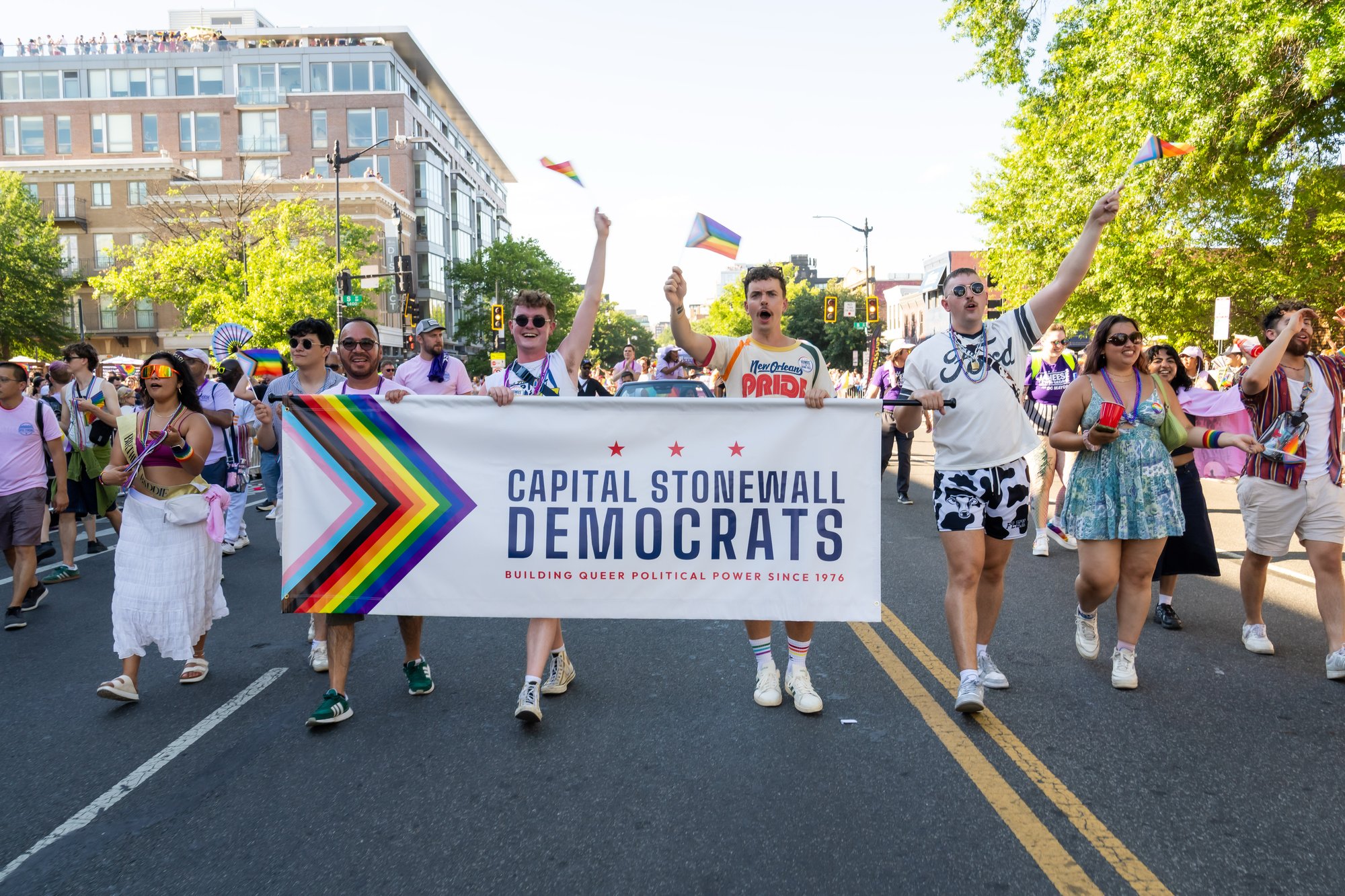
LGBTQ+ rights are under attack. Our answer is older than any attack: we look out for each other, and we build together. This is how we fight back — not just marching past the buildings where decisions get made, but taking seats inside them. Block by block. Neighbor by neighbor. This is what building power looks like.
Local office is where representation becomes tangible. Queer and trans commissioners bring lived experience into the decisions that shape a neighborhood — housing, development, nightlife, public safety, public space — and build the bench for what comes next.
The most ambitious hyperlocal LGBTQ+ candidate pipeline in the country: one city, 345 neighborhood seats, and every tool, lesson, and hand a first-time queer candidate needs — free, bilingual, and built to be copied. We're not waiting for representation to trickle down. We're building the bench from the block up — and setting the model for how candidate-support organizations can do this everywhere.
Twenty-five signatures. No filing fee. A real say in your block.
Petitions open July 6. The deadline to file is August 5. If you win, you're sworn in January 2, 2027.
See if you should run55 seats had no one on the ballot last time.
Your block needs someone. Maybe someone you know.
55 districts had no candidate last time — adopt one →
The strongest candidates are usually asked — and queer and trans neighbors get asked least. Being the person who asks is how a seat gets filled. We’ll send them one warm nudge for you.
Honest answers
The questions people actually ask.
Do I have to be a U.S. citizen?
You may be eligible to run even if you are not a U.S. citizen. DC lets many non-citizen residents register and vote in local elections. Confirm your eligibility with the D.C. Board of Elections.
How much time does it really take?
ANC service is a part-time public role — monthly meetings, constituent follow-up, and some committee work. Many commissioners balance it with a full-time job. The busy stretches are petitioning and, in a contested race, the fall campaign to November — but you can run as crew if this cycle is too full.
Is it safe to be this visible?
You set the pace on how public you are — your identity doesn't have to be the campaign. The portal covers digital safety, and you'll have peers in the cohort who've navigated it.
One honest thing to know up front: when you file to run, the DC Board of Elections makes your full legal name, the home address on your voter registration, and your filing contact a matter of public record — that's the law for everyone who appears on a ballot, not us sharing it. We tell you exactly what becomes public before you file, help you prepare, and point you to dcboe.org for questions or options about your address. More in our privacy policy.
Do I need money to run?
There's no filing fee, and many ANC campaigns spend close to nothing. If you do raise or spend, contributions are capped at $25 per contributor and you file OCF Form 18 within 60 days.
What if I'm not sure I'm ready?
Take the readiness check. It's honest, not a gate — and there's a place for you whether you run, help someone else win, or join the next cohort.
Support the work
Power the next out commissioner.
Training queer candidates and building these tools takes real money. If this moved you, chip in — every gift keeps it free for the people who need it most.
Join the club
Become a Capital Stonewall Democrats member.
This program is powered by CSD. Membership plugs you into the community behind it — endorsements, events, and neighbors who'll have your back.
Our partners